

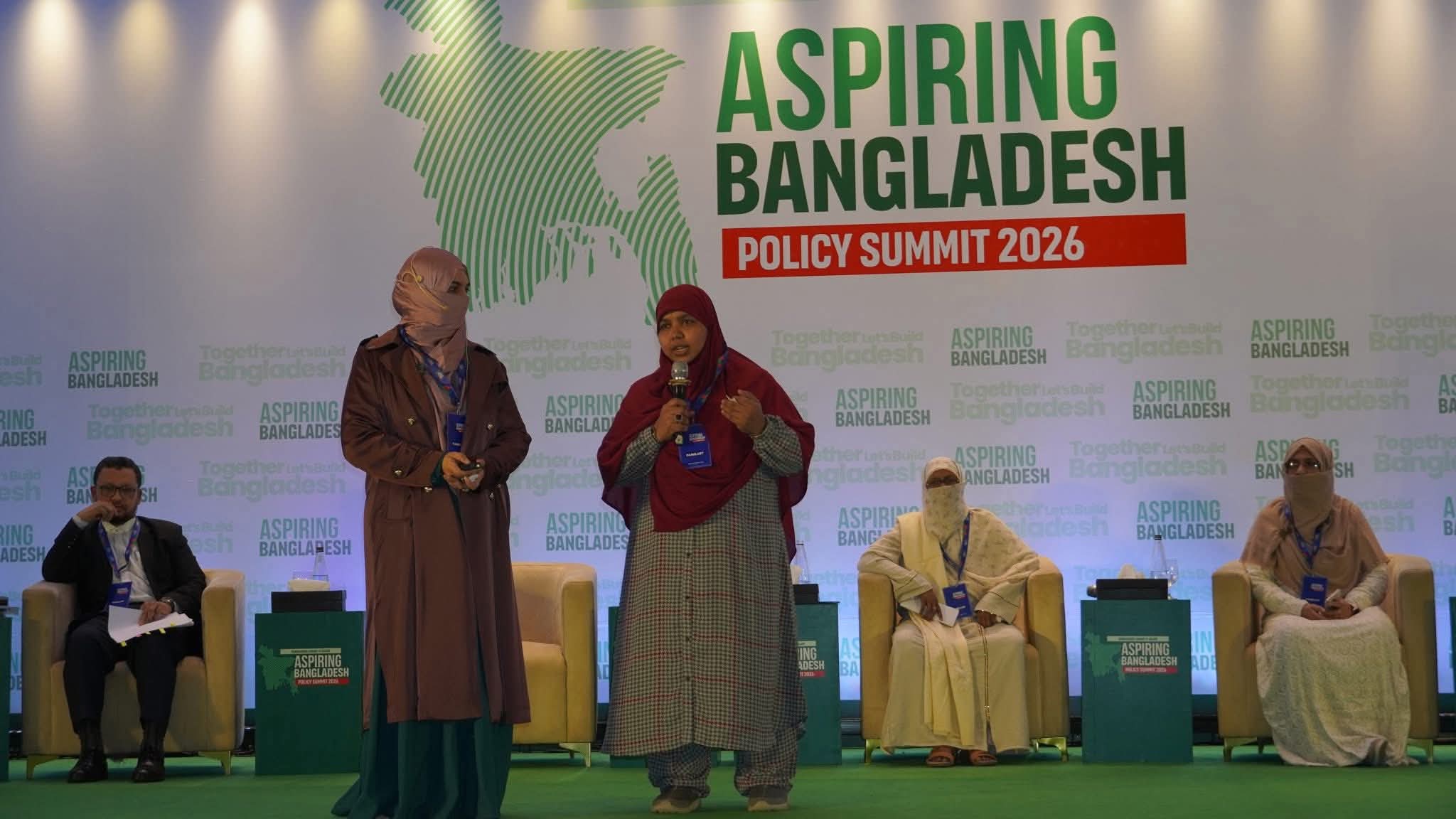
‘Aspiring Bangladesh | Policy Summit 2026’,
organized by Bangladesh Jamaat-e-Islami, offered a clearer view of their vision for pragmatic and realistic governance. It is truly noteworthy that Jamaat-e-Islami has proposed a framework built on implementable policies rather than the populist, bare promises often used to secure votes.
As a youth leader, I view these policies as a bold and future-oriented roadmap for national transformation towards ‘shared prosperity’. The economic vision is particularly grounded, with projected finance based on credible national income sources rather than abstract theory.
The commitment to public well-being is evident in the proposal to allocate 6–8% of the national budget to healthcare. By establishing 64 specialized hospitals, modernizing facilities of the existing ones, and providing free healthcare for citizens over 60, children under five, and pregnant women through the ‘First 100 Days Program’, the plan generates a truly comprehensive social safety net. The introduction of a Smart Social Security Card integrating NID, TIN, health and, all other social services demonstrate a transparent approach to digital governance.
To be truthful, industry-related policies seem equally transformative. Not increasing utility charges for the first three years of industrial operation and reviving closed factories through public-private partnerships, while uniquely allocating 10% ownership to the workers, embeds dignity and equity into our growth model. This is complemented by an ambitious ‘Vision 2040’ ICT agenda, aiming to create 2 million ICT jobs, generate $5 billion in digital exports, and support 1.5 million freelancers through a National Payment Gateway.
Regarding education and opportunity, the Jamaat’s proposed strategy is historic. The party’s propositions to establish the world’s largest women’s university, provide interest-free loans to 100,000 meritorious students and 500,000 graduates, and sending 100 scholars annually to the world’s top universities will cultivate the future leaders in different sectors of the country.
By creating a dedicated Ministry for Workforce Development and establishing Youth Tech Labs in every sub-district, Jamaat’s framework seeks to transform Bangladesh from a labor-based economy into a knowledge-based powerhouse. Moreover, interest-free loans for farmers ensures that no sector will be left behind.
These policies, among others, offer dignity instead of dependency and capability instead of charity. Yet their real worth will depend not on their rhetoric, but on how consistently and transparently they are executed. Without strong institutions, accountability, and public participation, even the most promising ideas risk becoming empty slogans.
Jamaat’s framework, therefore, should not be treated as a finished solution, but as a proposal that must be tested, debated, and refined. We hope that experts, critics, civil society actors, and political opponents will thoroughly evaluate, debate, and critically examine all policies proposed by Jamaat. Such continuous public inspection and constructive criticism will fortify accountability, enhance policy quality, and encourage inclusive dialogue.

